The Years at the Harold Pinter Theatre
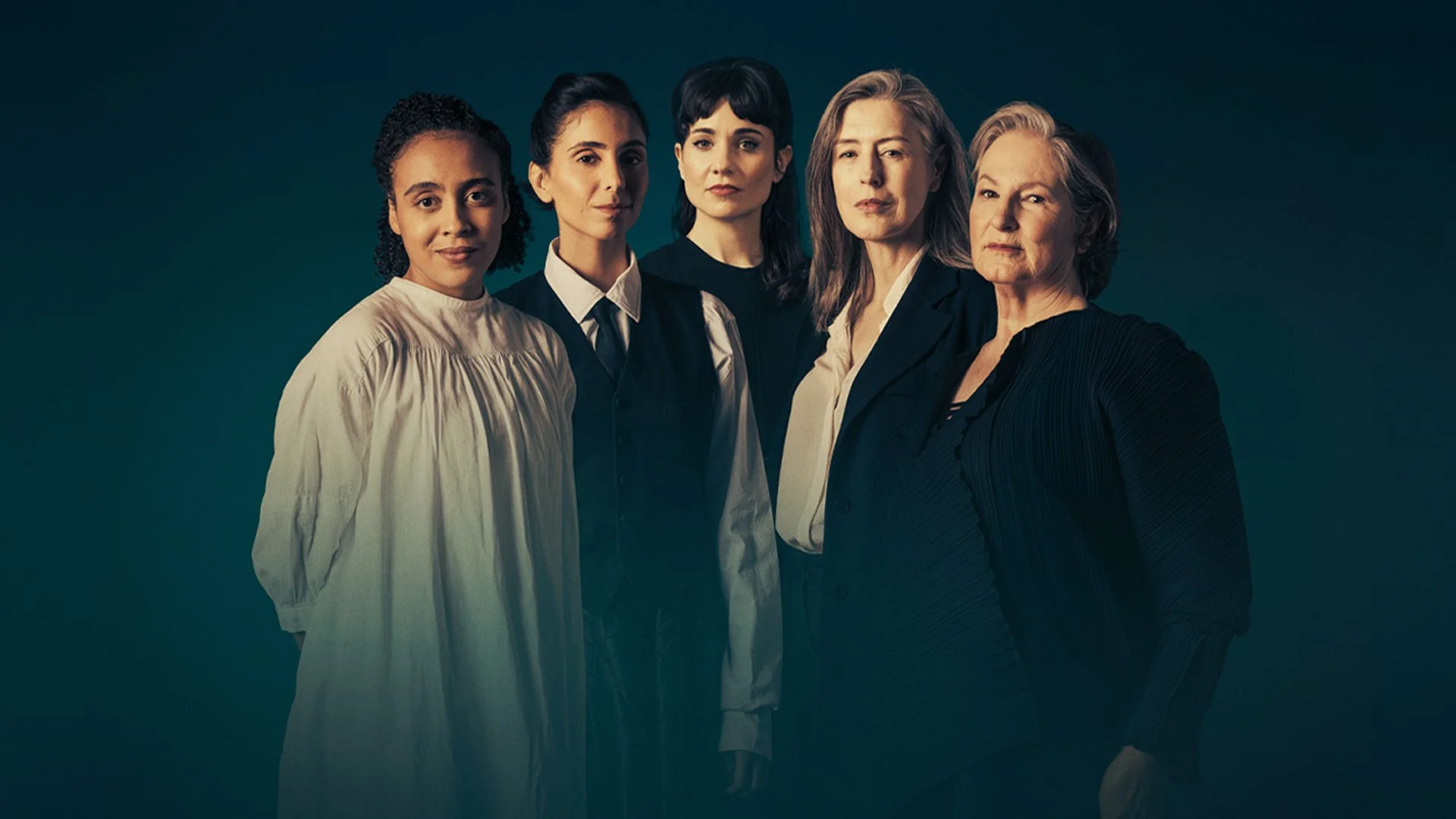
Deborah Findlay, Gina McKee, Tuppence Middleton, Anjli Mohindra and Harmony Rose-Bremner
Eline Arbo’s adaptation of Annie Ernaux’s The Years is a quiet, luminous meditation on time, memory, and identity. From the 1940s to the early 2000s, the production traces one woman’s life across decades of social, political, and personal change. But rather than following a single linear thread, it offers something more layered: five actresses—Deborah Findlay, Gina McKee, Tuppence Middleton, Anjli Mohindra, and Harmony Rose-Bremner—share the role, often appearing together onstage. They speak as one, interrupt, contradict and echo each other. A lifetime, refracted.
This ensemble approach creates a physical manifestation of layered identity. Instead of watching a woman age in the traditional theatrical sense, we see her multiple selves coexisting—early childhood brushing up against late-life reflection, adolescence conversing with motherhood, youth, and beyond. The effect is deeply human. It suggests that we are never only who we are right now but a constellation of every version we’ve been—and perhaps, of those we’ve yet to become.
It called to mind the recent production of Orlando at the Garrick Theatre, where Deborah Findlay also appeared as part of a chorus of Virginia Woolfs, many women representing one woman, or perhaps all women. That production conjured the fluidity of identity; The Years adds a sense of continuity, of endurance. Both use multiplicity to dramatize the inner life in an emotionally and formally expansive way.
The production’s minimal staging focuses on the performances and the text, allowing Ernaux’s intensely observational writing to shine. Gentle, atmospheric music runs beneath the narration like a heartbeat, offering a subtle emotional anchor without ever overwhelming the story.
Desire, in all its evolving forms, acts as a through-line across the decades. In a quietly radical moment, an older woman is shown enjoying physical intimacy with a younger lover—something rarely depicted so openly and without judgment onstage. Later, a scene of adolescent self-discovery plays out with awkward humour and surprising tenderness. These glimpses of sexuality aren’t sensationalized; they’re just part of life, portrayed with honesty and care.
But The Years doesn’t shy away from pain. One of the most arresting moments is a backstreet abortion in the 1960s—harrowing in its realism and made even more affecting by the stark simplicity of the staging. At an early performance, several audience members fainted during this scene; during my own, the show paused briefly when two women collapsed. The moment isn’t gratuitous—it’s devastatingly real, reminding us how theatre can unearth what’s often unsaid.
There’s also warmth and humour throughout. Ernaux’s story is one of introspection, but it’s never precious. Time and again, the production makes space for awkward laughter, contradictions, and the absurdities of growing up and growing older.
Perhaps the most powerful image comes at the end, when the cast freezes into a tableau—like a gallery of photographs from one life. It’s simple but piercing—a quiet reminder that all of it—every era, every reinvention—matters. None of it is wasted.
The Years isn’t really about the past, future, or even the present. It’s about the blur between them. The play suggests that time isn’t a line but a body—held in fragments, in voices, in the faces of others. What Arbo has created is more than an adaptation; it’s a theatrical embodiment of memory itself: diffuse, shifting, and achingly alive.