UNICORN at the Garrick Theatre
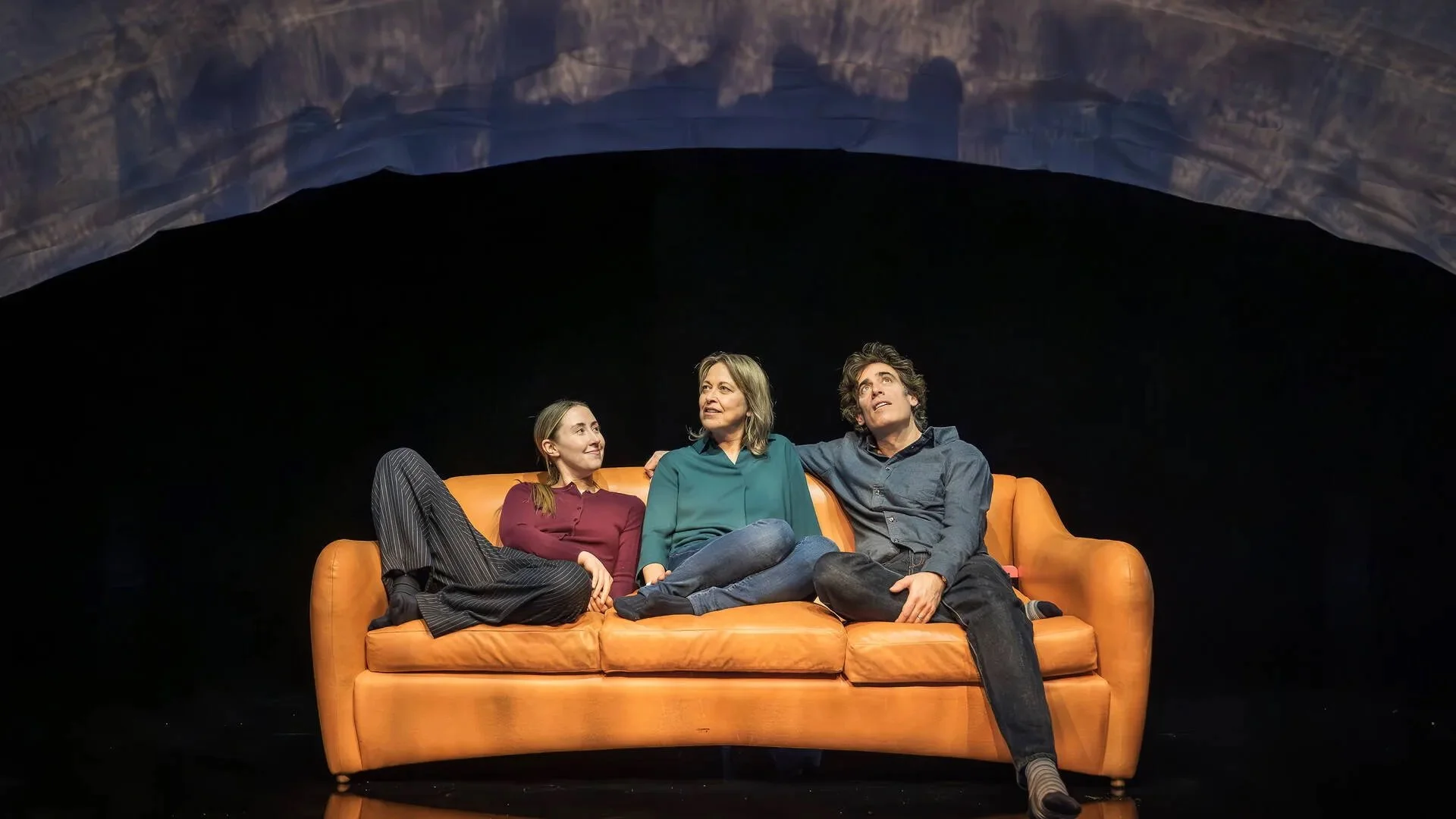
Unicorn is one of those rare plays that hits you with the shock of recognition. You’re watching something strange and specific, yet it feels oddly familiar. It’s about a couple who invite a third person into their relationship, but it’s also about time, intimacy, grief, and how we try to love each other in ways we were never taught.
The couple is Polly and Nick, played by Nicola Walker and Stephen Mangan (the same duo from The Split, which I unironically devoured during my parent's divorce). The chemistry is still there, still believable, and it pulls you into their world from the start.
The set is minimal and dreamy— a glowing paper globe that shifts with light and shadow. It’s a quiet, clever design that lets the characters do the work.
Polly is a poet and teacher. Her marriage to Nick feels lived-in, a little worn at the edges. Then she meets Kate—her 28-year-old student, sharp, articulate, and strikingly sure of herself. Polly falls for her or starts to, and tells Nick. Instead of imploding, the conversation turns tentatively and awkwardly to what it would mean to invite Kate into their relationship.
They try. Nick panics. He pulls away. Later, he cheats on Polly, not with Kate, but with someone else, and that breaks them. Not the sex, but the lie. The betrayal isn’t in the body; it’s in the silence.
Two years pass. Nick returns. He finds Kate again, apologizes, and asks if it’s too late. And somehow, it isn’t. They try again, not as a couple, but as a throuple. It’s clumsy and tender and strangely hopeful.
A subtle theme runs through the play: we don’t have a model for what three looks like. Nature doesn’t really do romantic trios. But it does other kinds—support systems, chosen families, trios that hold, carry, and share. There is no table with only two legs. The play doesn’t try to convince you that three is better than two. It simply opens the door and asks: what if?
And it’s funny. There’s something so satisfying about a play that can swing between sex, shame, power, and mortality and still make us laugh.
I won’t spoil the ending but it does quietly turn to something deeper. It asks us to examine the time we have and how we decide what to do with it, whether we want safety or truth, whether we can risk love that doesn’t come with a script. The play's treatment of mortality serves as a poignant reminder of life's uncertainties and the importance of seizing the moment.
Some critics found Kate too polished, too sure. But I didn’t mind that. We rarely see young women onstage who know what they want and aren’t punished for it. She felt refreshing, like a lot of my close girlfriends, not unrealistic.
One bedroom scene felt slightly off—the stage scale swallowed the intimacy—but that’s a minor quibble. Most of the play felt like being let into someone’s inner life. It stayed with me.
Go if you can. It’s not a manifesto; it’s a mirror. It’s a conversation that lingers. Not because it answers everything but because it reminds you that love isn’t about certainty—it’s about the courage to try again.